Custom Software Methodologies
We combine strategic thinking, agile execution, and continuous optimization to help organizations innovate faster, reduce risks, and achieve sustainable growth.
Why Does Our Method Matter
At DataByteWorks, our methodology goes beyond a standard development framework. We align technology with business needs, maintain clear communication, and create a delivery experience built on accountability, flexibility, and long-term value.
We begin with your business goals, challenges, and priorities rather than technology alone. Every project decision is evaluated based on how it supports your objectives, customer needs, and overall business direction.
We select technologies, architectures, and solutions based on your specific requirements, scalability needs, budget, and long-term roadmap. This helps create solutions that fit your business instead of forcing your business to fit a technology.
Clear communication remains central to how we work. Defined responsibilities, regular stakeholder interactions, and straightforward project reporting keep everyone aligned and provide visibility into key decisions and progress.
Your team remains actively involved in important decisions throughout the engagement. We listen to your feedback, understand your priorities, and adapt our approach to create solutions that reflect your users, business processes, and expectations.
We consider both current requirements and future business needs when shaping solutions. Our methodology emphasizes flexible architectures and thoughtful technology choices that can accommodate evolving workloads, users, integrations, and business demands.
We take responsibility for our commitments, decisions, and deliverables throughout the engagement. Clear ownership across teams helps maintain momentum, resolve challenges efficiently, and keep the project focused on its intended business outcomes.
From the first conversation to final delivery, our methodology connects business priorities, technical expertise, and practical execution. We create a structured path that keeps your project focused, informed, and ready to evolve as your needs change.
The Databyteworks Approach
Click any phase to see the deliverables, ceremonies, and where AI bends the curve. The same engine runs every engagement — scaled up or down to the scope.
Every successful solution starts with understanding the bigger picture. We work closely with stakeholders to uncover business objectives, operational challenges, user needs, and growth opportunities before defining the path forward.
AI-powered research tools accelerate market analysis, stakeholder insights, and opportunity identification—helping our consultants transform fragmented ideas into structured project requirements faster and with greater accuracy.
With clear objectives in place, we design the solution architecture, technology strategy, and implementation roadmap needed to support long-term scalability, performance, and innovation.
AI-assisted modeling helps evaluate technology options, architecture patterns, integration dependencies, and scalability scenarios, enabling smarter decisions before development begins.
Using agile methodologies, our multidisciplinary teams transform concepts into working solutions through iterative development cycles, continuous collaboration, and rigorous quality assurance.
AI copilots support coding, testing, documentation, and quality reviews, allowing our engineers to focus on solving complex business challenges while improving development efficiency and consistency.
Launch is not the finish line. We continuously monitor performance, gather insights, and implement improvements that help solutions evolve with changing business needs and market demands.
AI-driven monitoring and analytics uncover performance trends, user behavior patterns, and optimization opportunities, helping solutions evolve through data-backed improvements and ongoing innovation.
No two projects are the same. That's why DataByteWorks adapts the development methodology to match your business goals, team structure, project complexity, and delivery requirements, ensuring maximum efficiency, visibility, and results.
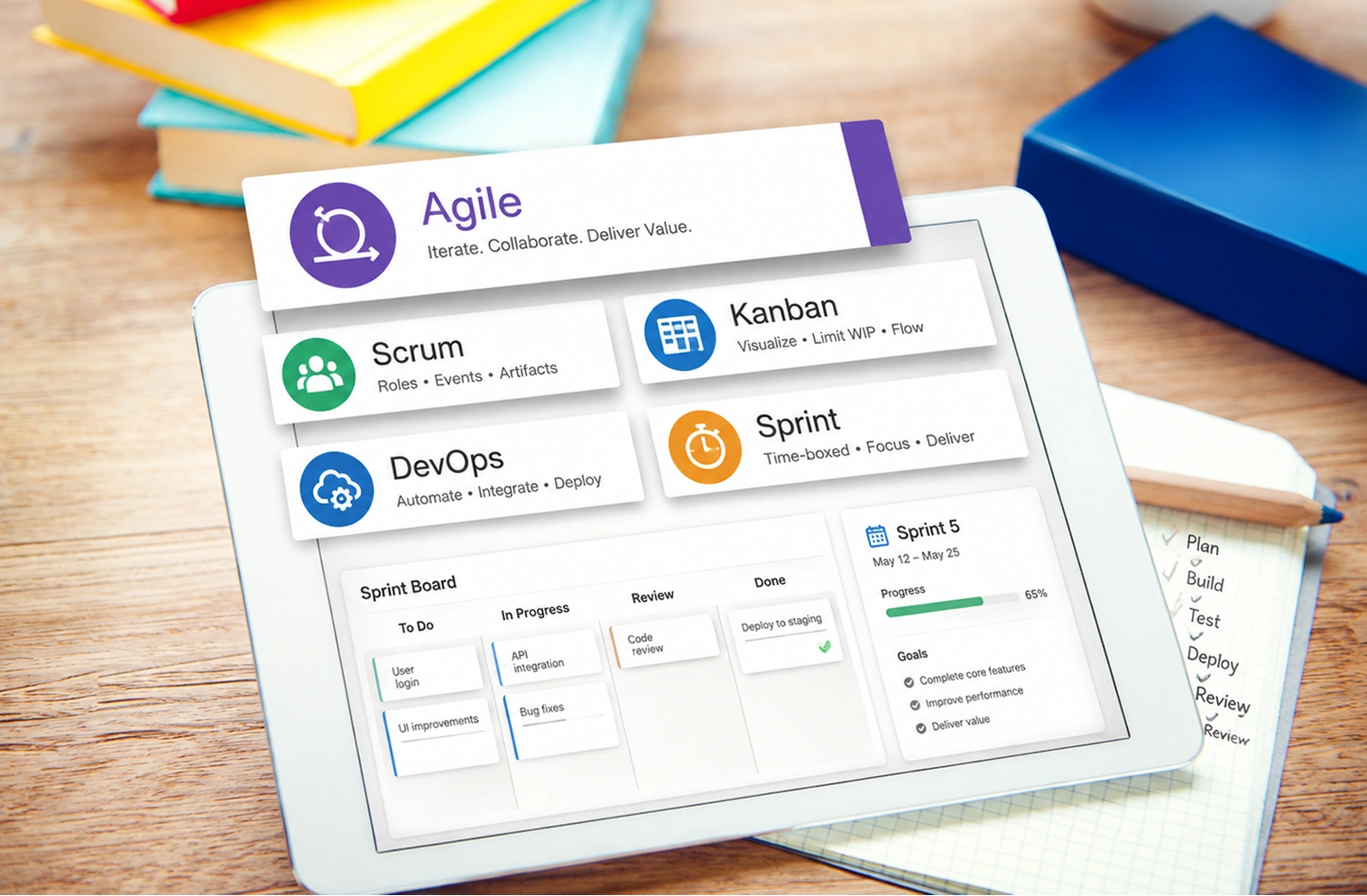
Ideal for projects that benefit from structured iterations and frequent stakeholder feedback. Scrum helps teams deliver incremental value through clearly defined sprints, priorities, and continuous collaboration.
For projects with changing priorities and ongoing requirements, Kanban provides complete workflow visibility, continuous delivery, and greater flexibility without disrupting progress.
Combining the discipline of Scrum with the adaptability of Kanban, Scrumban is well-suited for projects where priorities evolve rapidly, and teams require greater operational flexibility.
Large initiatives involving multiple teams require coordinated execution. Scrum of Scrums enables effective cross-team collaboration, dependency management, and alignment across complex projects.
When multiple teams work toward a shared product vision, LeSS promotes transparency, synchronized delivery, and unified backlogs while reducing duplication of effort.
For enterprise organizations managing large portfolios and complex programs, SAFe provides structured governance, strategic alignment, and scalable agile practices across departments and teams.
Certain projects require highly structured planning and documentation. For these scenarios, we support traditional delivery models such as Waterfall, V-Model, Spiral, and Rapid Application Development (RAD) based on project needs and compliance requirements.
We focus on outcomes, not just tasks and timelines, aligning every project with your business goals. Our approach turns strategy into measurable impact, ensuring technology delivers real value.
We integrate development and operations practices to streamline collaboration, automate repetitive workflows, and create a smoother path from code development to production deployment. This helps teams respond faster while maintaining greater control over releases and infrastructure.
Continuous integration and continuous delivery practices help automate code integration, builds, validation, and deployments. By reducing manual intervention and identifying issues earlier, teams can deliver updates more consistently and with greater release confidence.
Automated testing is incorporated across appropriate stages of development to validate functionality, integrations, and application behavior. Combined with code reviews, engineering standards, and quality checks, this helps identify defects early and maintain a dependable codebase.
Security considerations and performance monitoring are integrated into the engineering lifecycle rather than treated as post-development activities. Continuous visibility into application performance, system health, and potential security concerns helps teams identify issues early and make informed improvements.
How Can We Serve You
Every business has unique goals, timelines, and budgets. At DataByteWorks, we offer flexible engagement models that adapt to your project requirements, from rapid AI prototypes to enterprise-scale software development. As your business evolves, you can seamlessly transition between models without disrupting delivery.
Build a long-term, cross-functional team of software engineers, AI specialists, designers, QA experts, and DevOps professionals working exclusively on your project.
Ideal for projects with clearly defined requirements, timelines, and deliverables. We manage planning, execution, and delivery with predictable costs and milestones.
Extend your in-house engineering team with experienced developers, AI engineers, cloud architects, data experts, or QA professionals who integrate seamlessly into your workflows.
Validate ideas before full-scale development through technical consulting, architecture planning, UI/UX design, AI feasibility assessments, and Proof of Concept (PoC) development.
Share your project requirements and learn how our proven methodology helps organizations deliver AI, data, and software initiatives with confidence.